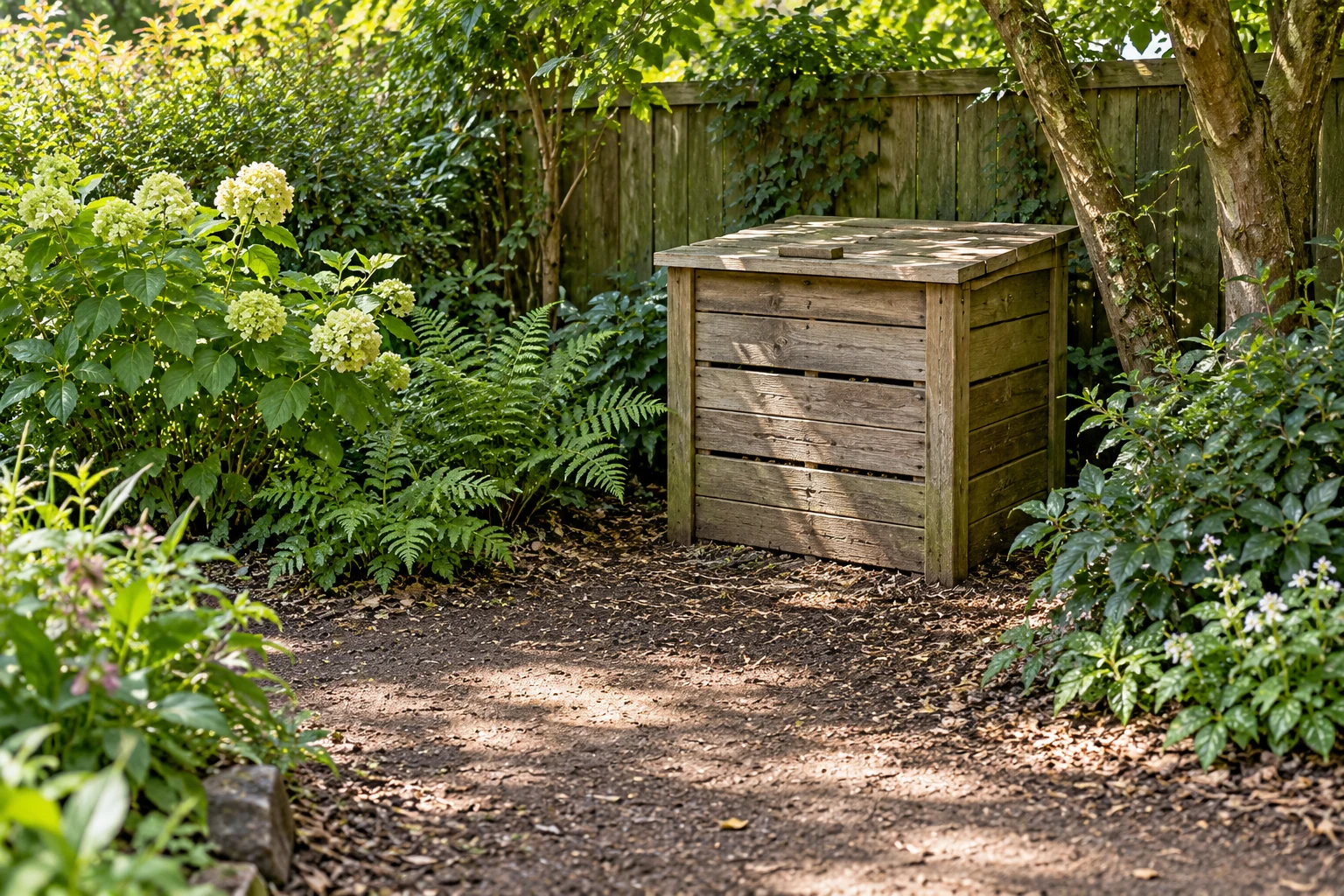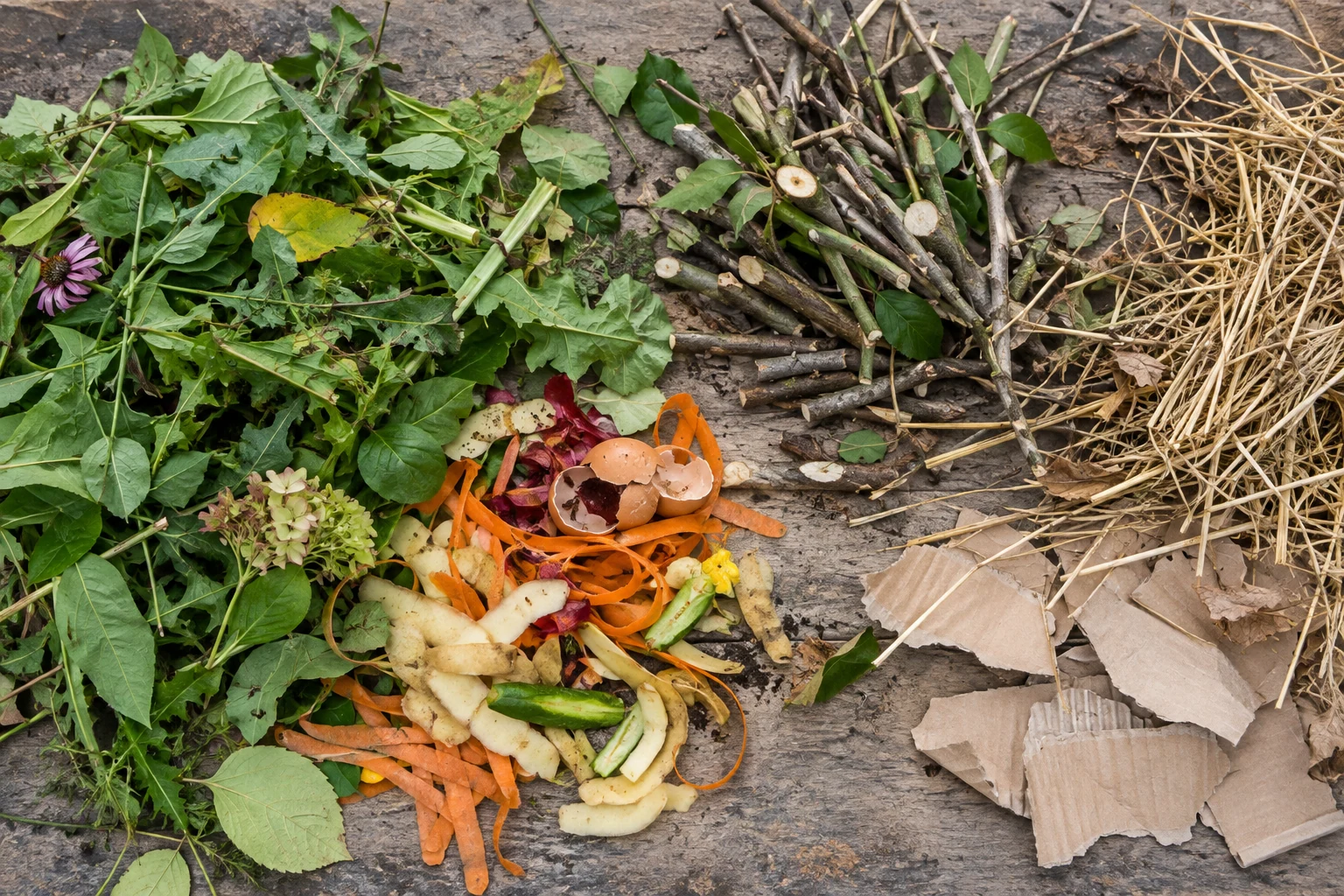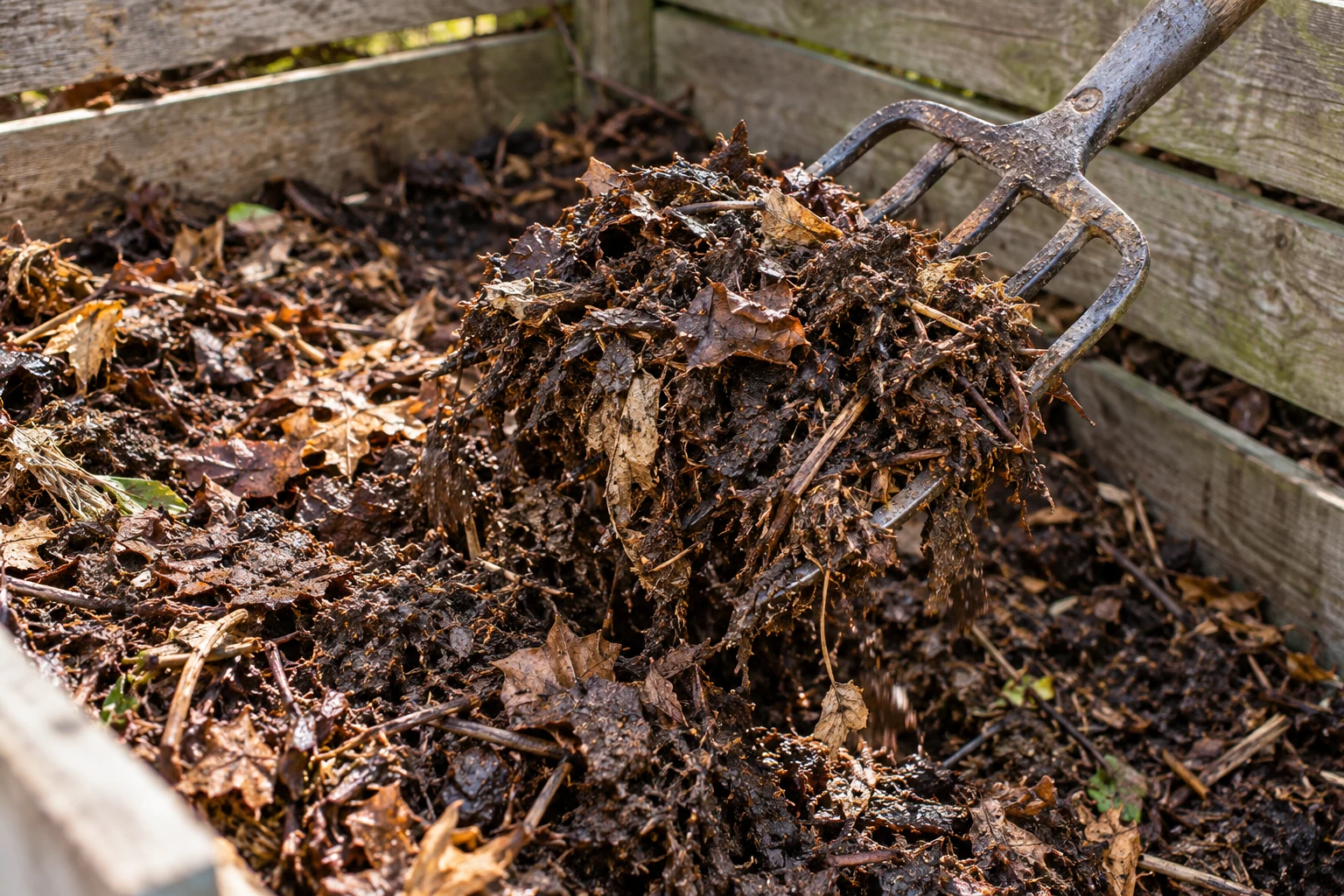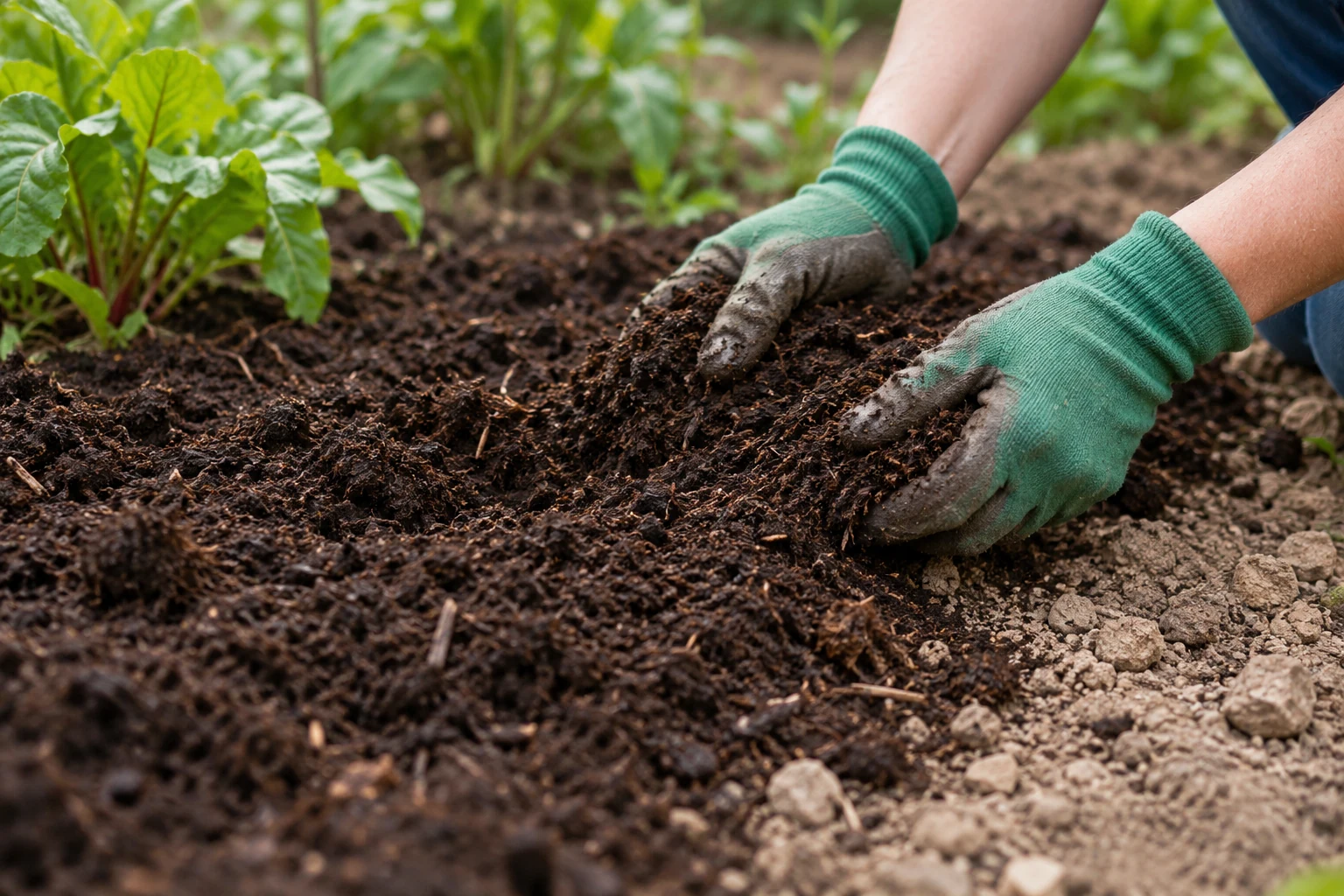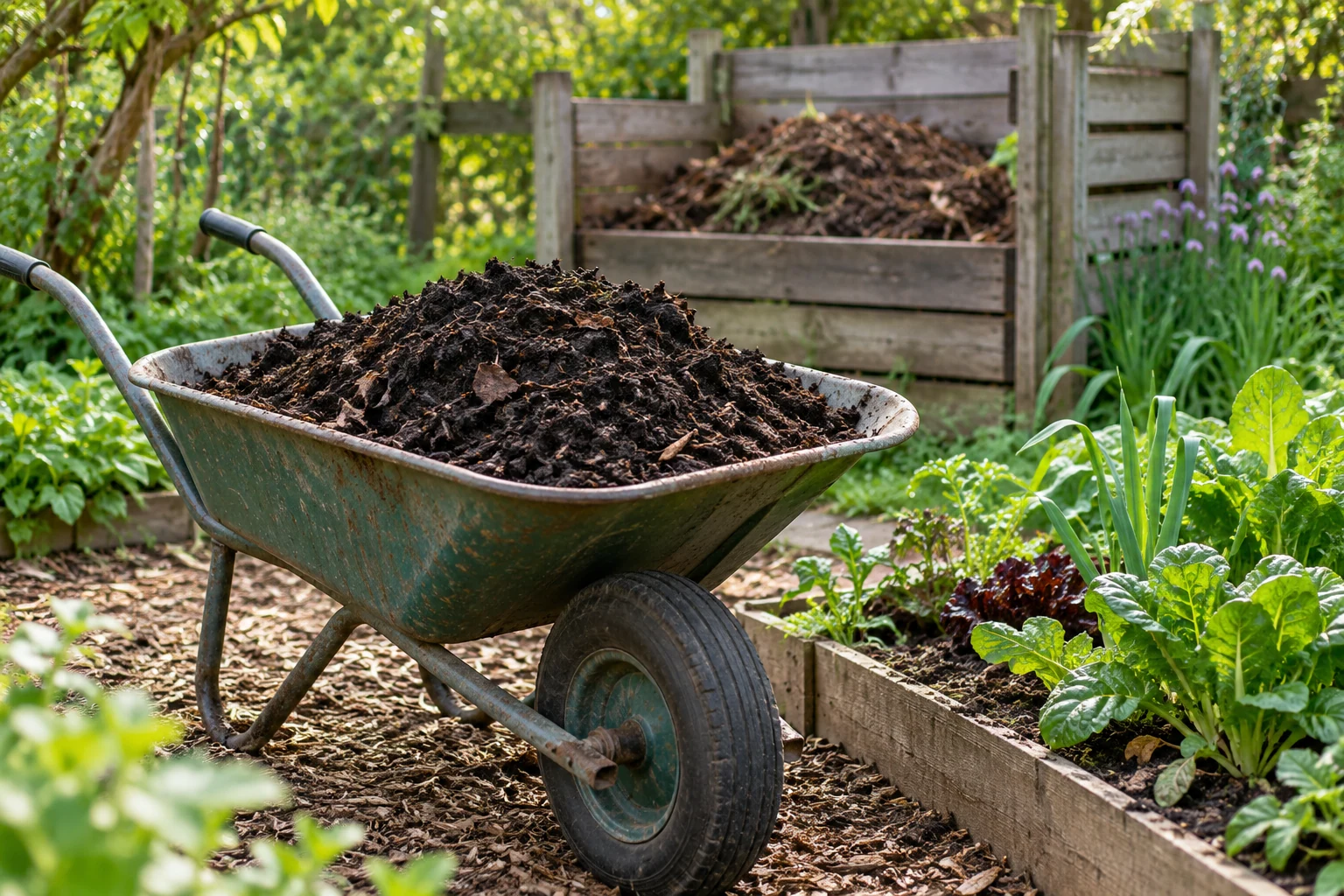
Garden waste can become a useful resource for your soil. Mixing soft, leafy material with chopped woody waste lets you recycle lawn cuttings, annual weeds, faded flowers and prunings alongside vegetable peelings, paper and cardboard. The finished compost supplies organic matter that improves soil structure. It can help sandy ground retain moisture and improve drainage in heavy clay. A compost bin makes the process more compact and efficient than an open heap, while the decomposing contents support fungi, soil micro-organisms and a variety of invertebrates. ## Begin with a bin you can use easily Choose your setup around two practical questions: how much space can you spare, and how much suitable waste do you produce? A compact plastic bin is an option for a small garden; a wooden bay can accommodate the output of a larger plot. Several bays let you keep material at different stages separately. Start when you have ingredients available, rather than waiting for a particular date. Give the location equal attention. Look for an accessible, sheltered corner in partial or full shade, where conditions are less exposed to extremes. A bin standing on soil offers drainage and access for soil organisms. If a hard surface is your available option, add a few spadefuls of soil at the start. Whatever the design, it should keep rain out while allowing drainage and air movement. ## Balance soft greens with dry browns Composting ingredients fall into two broad groups. Greens are nitrogen-rich materials such as grass cuttings, leafy plants, crop remains and vegetable peelings. Browns supply carbon and include chopped woody prunings, dry stems, straw, paper and cardboard. A useful rough balance is 25–50% green material, with browns making up the remaining 50–75%. Avoid allowing one ingredient to dominate. Grass cuttings are especially liable to turn slimy and unpleasant when left as an unmixed mass. Treat those proportions as a guide for assembling a varied mixture. When you bring grass cuttings to the bin, combine them with suitable browns as you add them. If you have cuttings ready but too little brown material, keep the cuttings beside the bin until you can make a balanced addition. This turns ingredient choice into a regular habit instead of a correction after the contents become unpleasant. Prepare bulky ingredients before they go in. Chop long stems and woody prunings, and tear or shred paper and cardboard so they can break down more successfully. For example, vegetable peelings and torn cardboard offer ingredients from both groups, while leafy garden debris can be combined with chopped prunings. The aim is variety and balance across the contents. Concentrate on that mixture and its aeration before considering products sold as compost starters or accelerators; the source guidance says these are generally unnecessary. ## Give the contents air and time Mixing introduces air, while excess wetness and compaction reduce it and slow decomposition. Turning several times a year can speed progress, although balanced ingredients can compost without regular turning. Maturity may take six months to two years; warm weather generally speeds the process, and winter slows it. Finished compost is dark brown, crumbly and soil-like, with an earthy woodland smell. Pieces that have not decomposed can go into the next batch. Mature compost can be spread over soil as a mulch at least 5cm thick. Make each mixing session a chance to assess the contents. If space and effort allow, empty the bin and refill it, or transfer the material into another bin. If that is impractical, fork through or stir the contents every few months, mixing what you can and introducing air. During dry weather, check whether the material needs water to remain moist. Let the condition of the mixture guide your next adjustment. Wet, slimy material with an unpleasant smell points toward excess water and insufficient air: protect it from rain, work in more chopped woody waste, straw or shredded paper, and avoid large additions of unmixed grass. Dry, fibrous material with little decomposition suggests insufficient moisture and too much brown material; water it if it is dry in summer. If flies gather, cover exposed kitchen scraps with garden waste and check whether excessive dampness is limiting aeration. ## Finish by checking the compost itself Use the appearance, texture and smell together when deciding whether a batch is ready. Look for the dark, crumbly material described above, and return recognisable unfinished pieces to a new batch. This lets you use the mature portion while giving the remaining ingredients more time. Spread the finished compost over the soil surface as mulch, using the minimum 5cm depth as your guide. This helps retain moisture and suppress weeds, while worms gradually incorporate the material into the ground. Garden compost can also become an ingredient in a potting mixture when combined with other materials such as soil. For a straightforward first use, mulching brings the process back to its purpose: returning garden waste to the soil as useful organic matter.